 Original laugh
Original reactions, kept
The actor's real laugh, gasp or sob stays in the scene. Only the words are dubbed.
Spelo dubs films and series into Japanese from any language, and Japanese into English and 90+ others. Every character speaks at the right level of politeness, with the delivery and the film's sound intact.
One scene, up to two minutes, in one target language.

それを言うためだけに、わざわざ来たの?
じゃあ、夕飯食べていって。
Japanese changes with both the listener and the speaker: keigo for a boss, plain speech for a friend, and a first-person word (watashi, boku, ore) that fits the character.
Original laughThe actor's real laugh, gasp or sob stays in the scene. Only the words are dubbed.
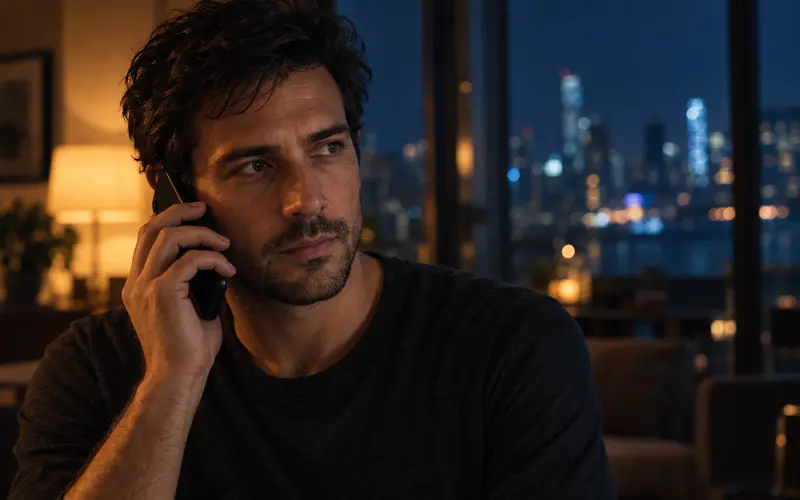 Phone sound kept
Dialogue heard through a phone, radio, TV or loudspeaker keeps that sound in the new language.
Share a video file or a link. Add who's-who notes if you have them, so names and relationships are right from the first line.
Tell us who will watch it: the region, the variety of the language and how formal the film should sound.
Every line is written for its scene, voiced with the original emotion and mixed over the film's own sound.
Your team signs off the language, changes any line and re-voices it in seconds.
Download the dubbed video once your team is happy with every line.

Japanese builds relationships into grammar, so a word-for-word dub sounds wrong to native viewers.
Keigo, polite and plain speech mark rank and closeness in every sentence.
Spelo: Spelo settles who each character is and how they speak to each other before writing a line.
Whether a character says watashi, boku or ore tells the audience who they are.
Spelo: Each character keeps one voice and one way of speaking across the film.
Japanese lines can run shorter or longer than the original and must still fit the shot.
Spelo: Lines are placed at the original timing, and speed can be adjusted line by line.
Foreign names need one consistent katakana spelling throughout.
Spelo: Each foreign name gets one katakana spelling in the brief, used in every line.
Bring a library of films and series to Japanese-speaking audiences, title by title.
Release new seasons with a Japanese version alongside the original.
Give older titles a Japanese dub without booking a recording studio.
Yes. See anime dubbing and translating video to English.
Yes. The original voice actors' gasps and laughs are kept, and every character keeps one voice.
Yes. Your team can edit every line, voice and emotion in the Spelo Studio.
One scene, up to two minutes, dubbed into Japanese and returned next to the original within a few working days.
Send us one scene, up to two minutes. We'll dub it into Japanese and send it back next to the original, within a few working days.